
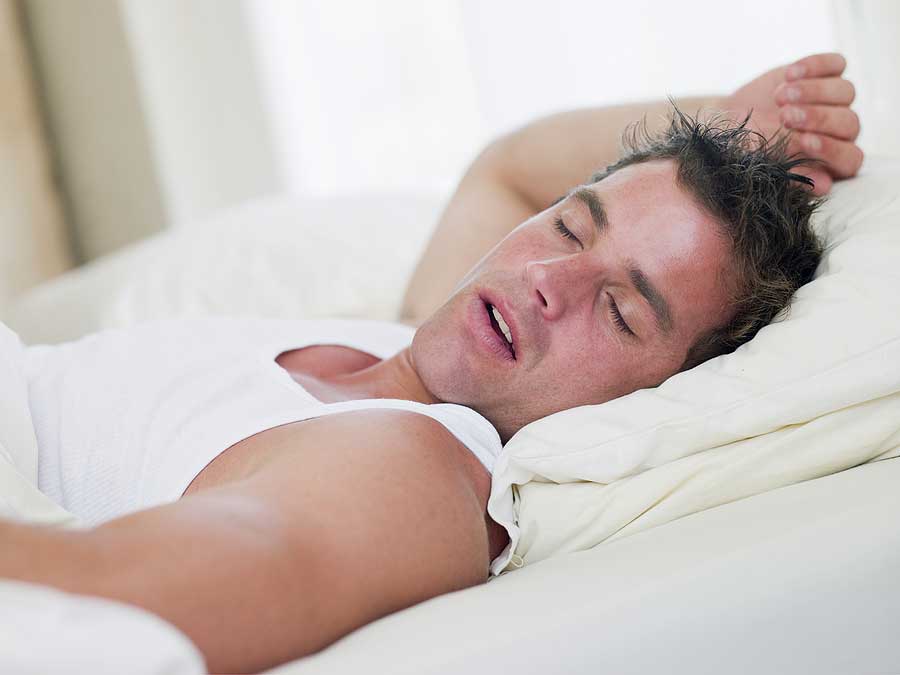
A good night’s sleep should leave you feeling refreshed, not reaching for a glass of water, rubbing your sore jaw or wondering why your breath could clear a room. While sleep is essential for overall health, what happens between bedtime & breakfast can also affect your teeth, gums & jaw.
Dry Mouth: the Importance of Saliva
Ever wake up with a mouth that feels like you’ve been sleeping in the desert? You may be experiencing dry mouth. Leaving your mouth open or mouth breathing during sleep can contribute to this uncomfortable feeling, although medications, certain health conditions & other factors can also reduce saliva production.
Saliva is more than nature’s mouthwash. It helps wash away food debris, supports digestion, protects oral tissues & helps defend teeth against decay. When saliva levels drop, harmful acids & bacteria can have a greater opportunity to cause trouble. Persistent dry mouth is associated with a higher risk of cavities, oral discomfort & infections.
Try drinking water throughout the day, brushing twice daily with fluoride toothpaste & cleaning between your teeth every day. Sugar-free gum can stimulate saliva while you are awake, but it is not a substitute for investigating persistent dryness. If the problem continues, your dentist can help identify possible causes & recommend appropriate products to relieve symptoms.
Teeth Grinding
Do you wake up with a sore jaw, sensitive teeth or a headache that seems to have appeared overnight?
Sleep bruxism is the involuntary grinding, clenching or gnashing of teeth during sleep. Some people never notice it until a partner reports suspicious nighttime noises or a dentist spots the evidence during an examination. Others wake up with jaw soreness, facial muscle fatigue, headaches or sensitive teeth.
Frequent, forceful grinding can wear down enamel, contribute to cracks in teeth & damage fillings, crowns or other dental restorations. Enamel does not grow back, so catching excessive wear early matters. Jaw discomfort may also interfere with your ability to chew comfortably.
Stress & anxiety can play a role in bruxism, but it is not the only possible contributor. Sleep patterns, genetics, certain medications & other factors may be involved.
Your dentist can check for signs of wear & tenderness & discuss whether a custom-made night guard is appropriate. A guard can help protect teeth from damage, although it does not necessarily eliminate the grinding itself.
Snoring: More Than Just Bedtime Noise
Snoring happens when air moves through a narrowed airway, causing surrounding tissues to vibrate. Although an occasional snore may simply disrupt your partner’s beauty sleep, frequent loud snoring can be a sign of obstructive sleep apnea (OSA), a condition in which the airway repeatedly becomes blocked during sleep. Other warning signs include gasping or choking during sleep, daytime sleepiness & waking with a dry mouth or headache.
Your mouth, jaw & airway are closely connected. People with sleep-disordered breathing may breathe through their mouths during the night, leaving oral tissues dry & uncomfortable. Dentists may also notice physical clues, such as ridges along the sides of the tongue, that can help prompt a conversation about possible sleep apnea.
Sleep Apnea
Snoring alone does not mean you have sleep apnea. However, if your snoring comes with gasping, pauses in breathing, morning headaches or persistent daytime fatigue, it is worth discussing with a healthcare professional.
Obstructive sleep apnea occurs when the upper airway repeatedly narrows or collapses during sleep, reducing or temporarily stopping airflow. These interruptions can fragment sleep & leave you feeling exhausted even after spending a full night in bed.
Sleep apnea can overlap with nighttime mouth breathing, dry mouth & bruxism. These issues can contribute to oral discomfort or tooth damage, while untreated sleep apnea itself can carry significant health risks, including high blood pressure & impaired daytime alertness.
Diagnosis typically involves a healthcare professional’s assessment & may require a sleep study. Treatment depends on the individual & can include positive airway pressure therapy (CPAP) or a custom-fitted oral appliance. Some appliances reposition the lower jaw to help keep the airway open.
Adjusting Your Bedtime Routine
You cannot control every snore or guarantee that your jaw will behave perfectly overnight, but you can give your mouth a better start before bedtime. Brush twice daily with fluoride toothpaste, floss or clean between your teeth daily & keep up with regular dental checkups. These simple habits help protect your teeth even when nighttime issues arise.
If dry mouth is a recurring problem, drink water regularly, ask your dentist about suitable saliva-support products & review any potentially contributing medications with your healthcare professional. Do not stop prescribed medication without medical advice. If you grind your teeth, ask about tooth protection & strategies tailored to your symptoms.
For suspected sleep apnea, arrange an assessment rather than relying on an over-the-counter snoring remedy. A qualified dentist may be able to provide a custom oral appliance when appropriate, with follow-up to check its effectiveness & monitor possible changes to your bite. Some people need CPAP or another medical treatment instead.
Sources
https://www.nidcr.nih.gov/health-info/saliva-salivary-gland-disorders
https://www.nidcr.nih.gov/health-info/bruxism
https://jada.ada.org/article/S0002-8177(21)00550-X/pdf
https://www.nhlbi.nih.gov/health/sleep-disorder-treatments